What i did was dance - A family house in Santorini
Located on one of Santorini’s busiest vehicular streets, the project begins from a condition of contradiction: a domestic program inserted into a former commercial shell in an acoustically and visually compromised setting. Rather than treating the site’s non-ideal location as a limitation, the reconstruction uses it as the project’s primary design problem, how to produce a house that is spatially and sensorially detached from the constant motion of traffic.
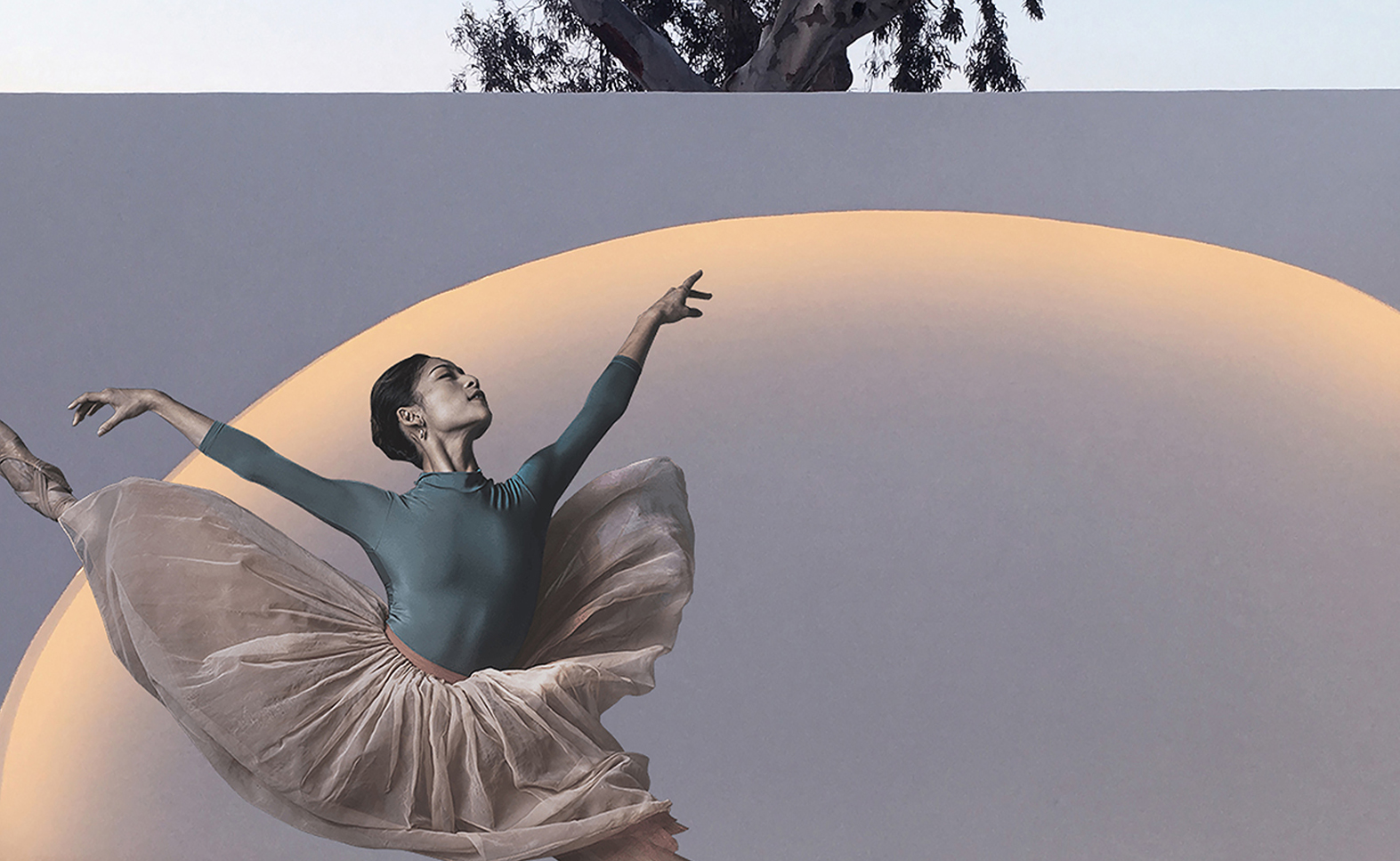
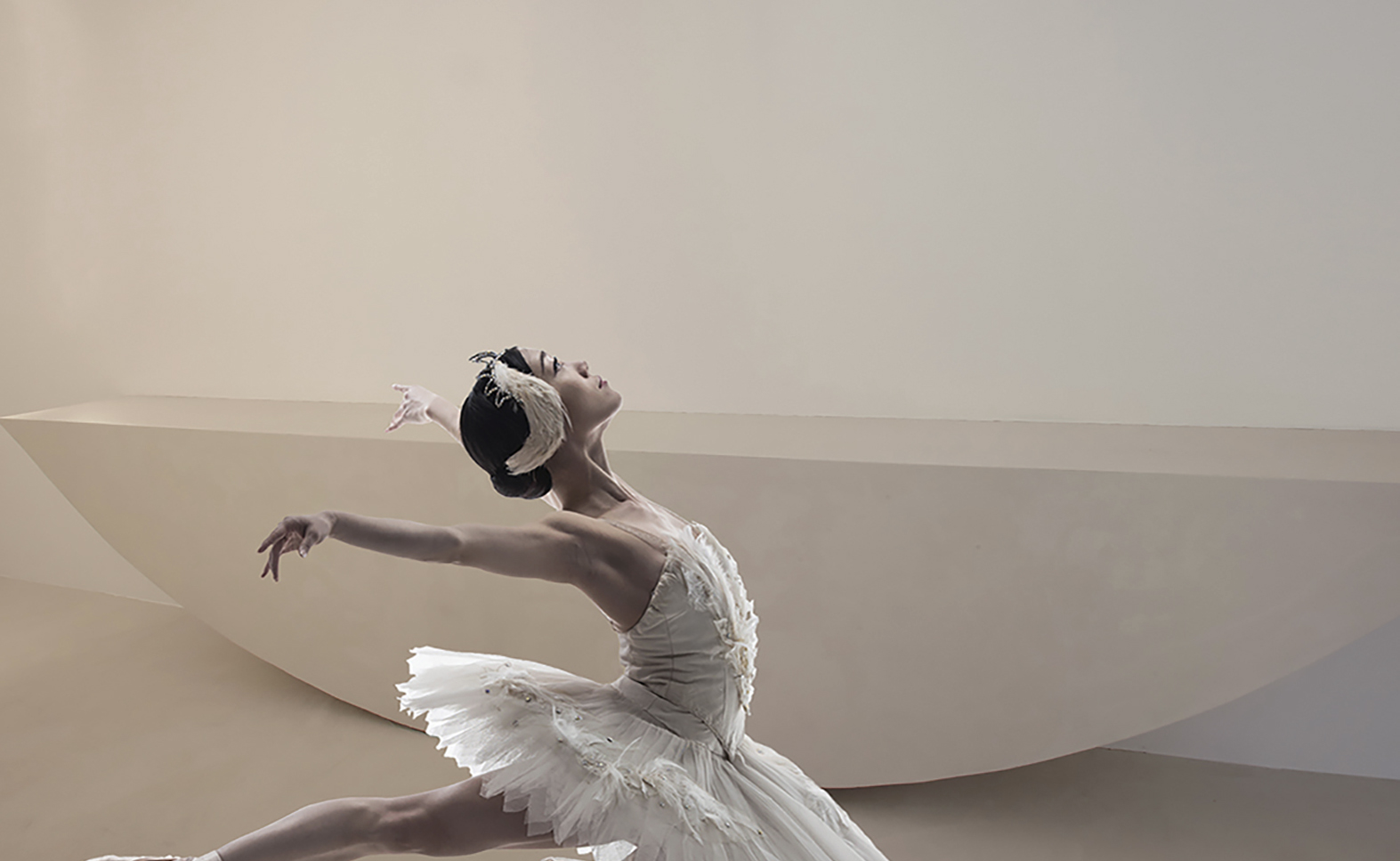
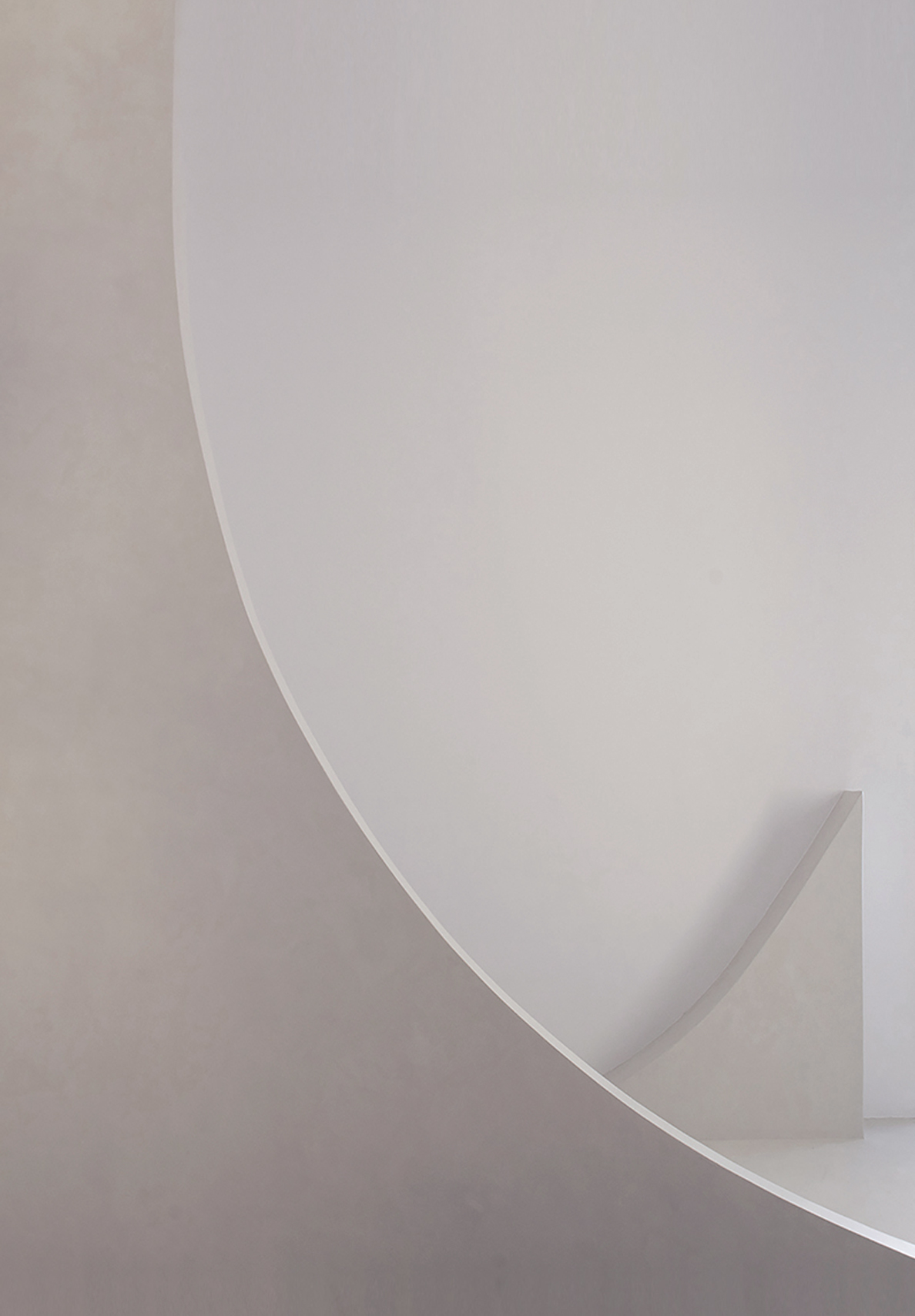
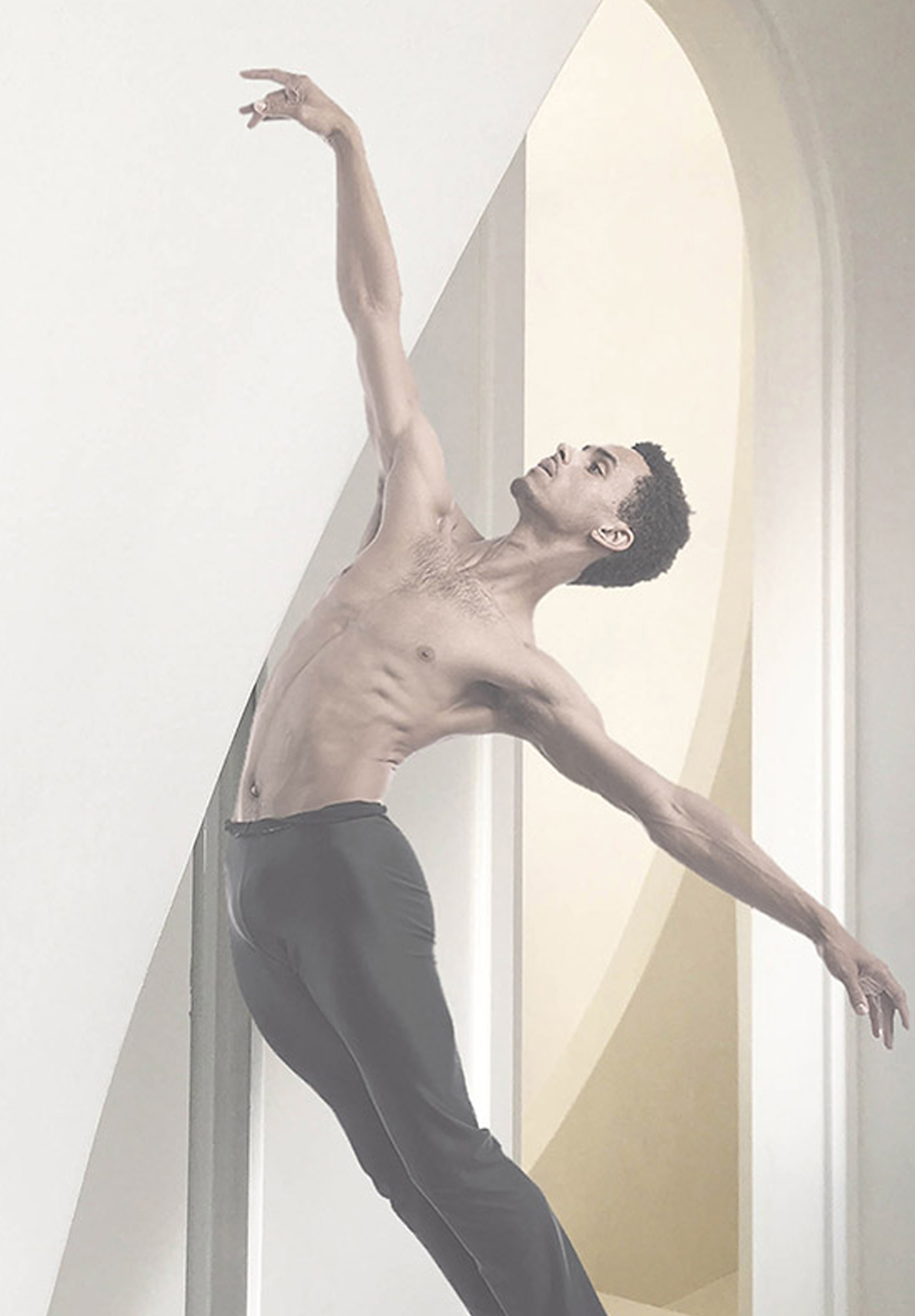
The conceptual response is to replace the external movement of cars with another type of motion: the silent, controlled, rhythmic movement of ballet. The project does not literalize dance as image; instead, it abstracts the geometry of the moving body and translates it into a coherent architectural morphology. Arches, vaults, thickened openings, and curved built-in elements are composed as “captured movements,” forming a sequence of stable but dynamic spatial configurations.
This strategy is most legible in the way perception changes through movement. As one moves through the house, forms align, overlap, and separate; compositions that appear symmetrical from one viewpoint become oblique and layered from another. The project’s dynamism therefore emerges from the body of the viewer in motion, not from moving parts. In this sense, the house operates as a choreographed perceptual field in which architectural stability and spatial rhythm coexist.
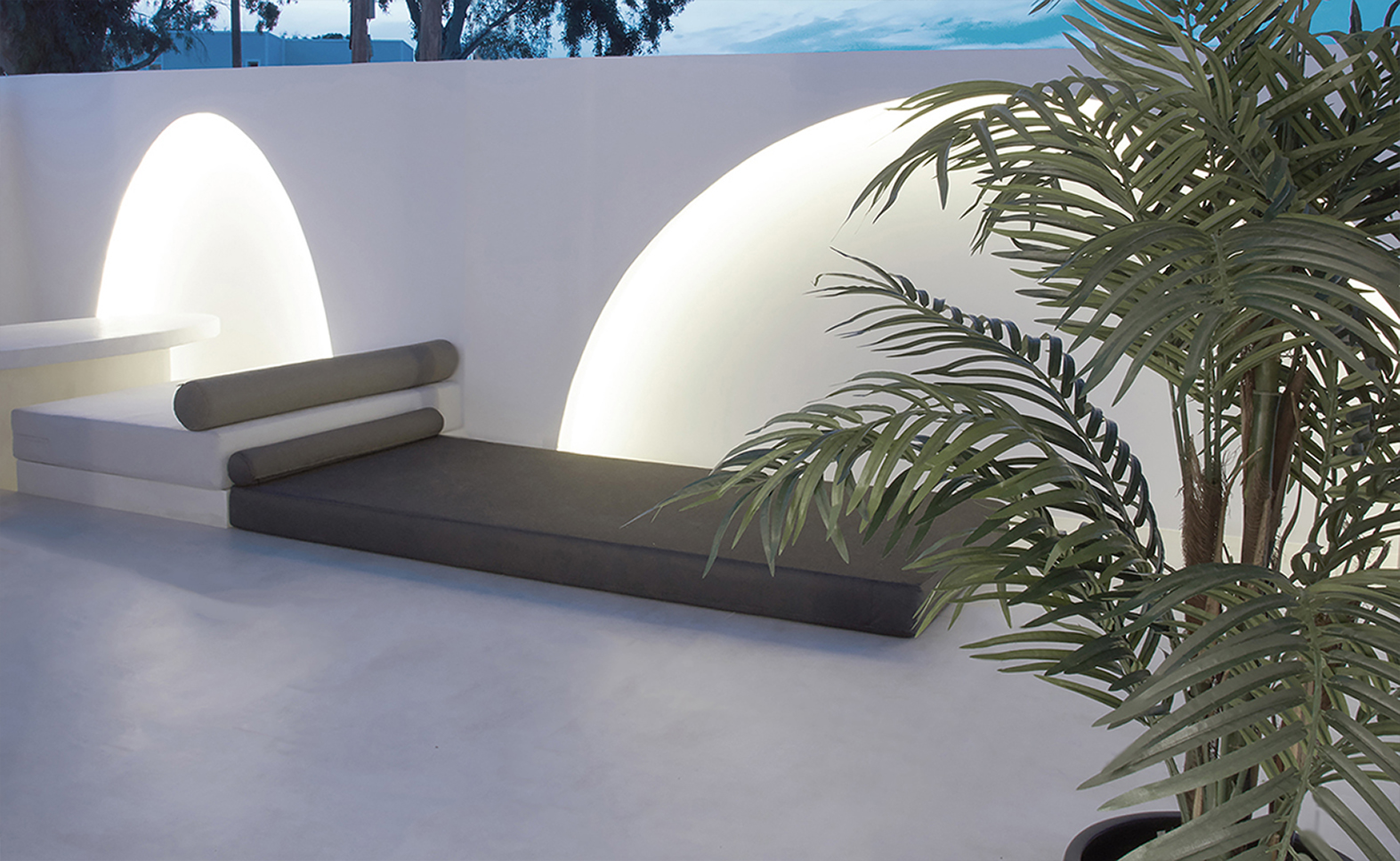
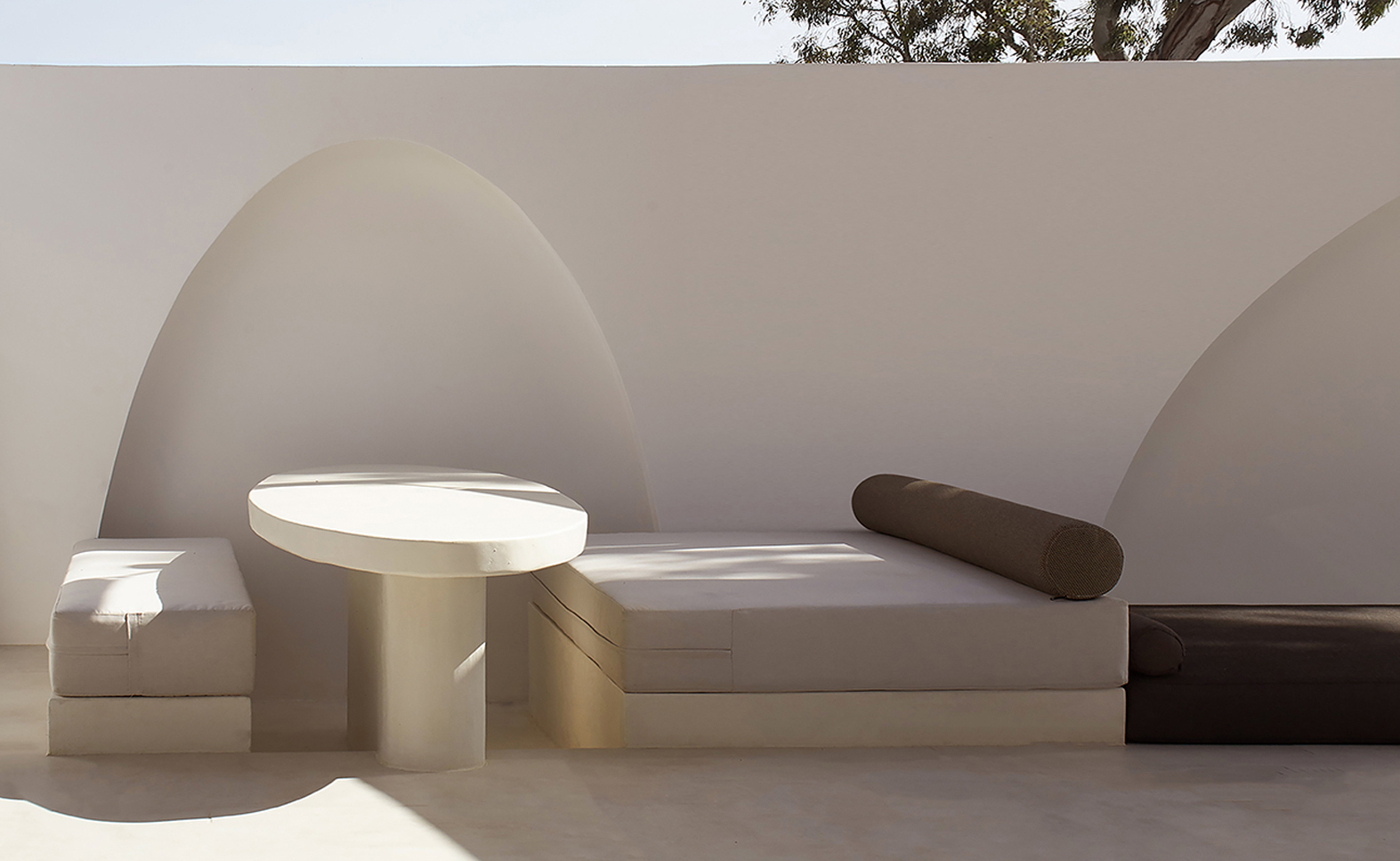
The outdoor space is organized by a dominant masonry wall articulated through three distinct arches. This wall is not merely an enclosure element but a spatial infrastructure: it defines the outdoor dining area, the resting zone, and the pool area, while simultaneously constructing privacy from the street and framing internalized exterior life. The photographic sequence suggests that the wall also acts as a light-and-shadow surface, with curved recesses and openings registering solar movement throughout the day.
A mirrored organizational logic is established between exterior and interior through three corresponding entrances to the house. Two lead to the bedrooms and one to the shared living/kitchen zone, creating a clear tripartite access system that reinforces both functional zoning and formal symmetry. This mirroring produces a strong spatial legibility at the threshold, where entry is read as a compositional event rather than a conventional doorway condition.
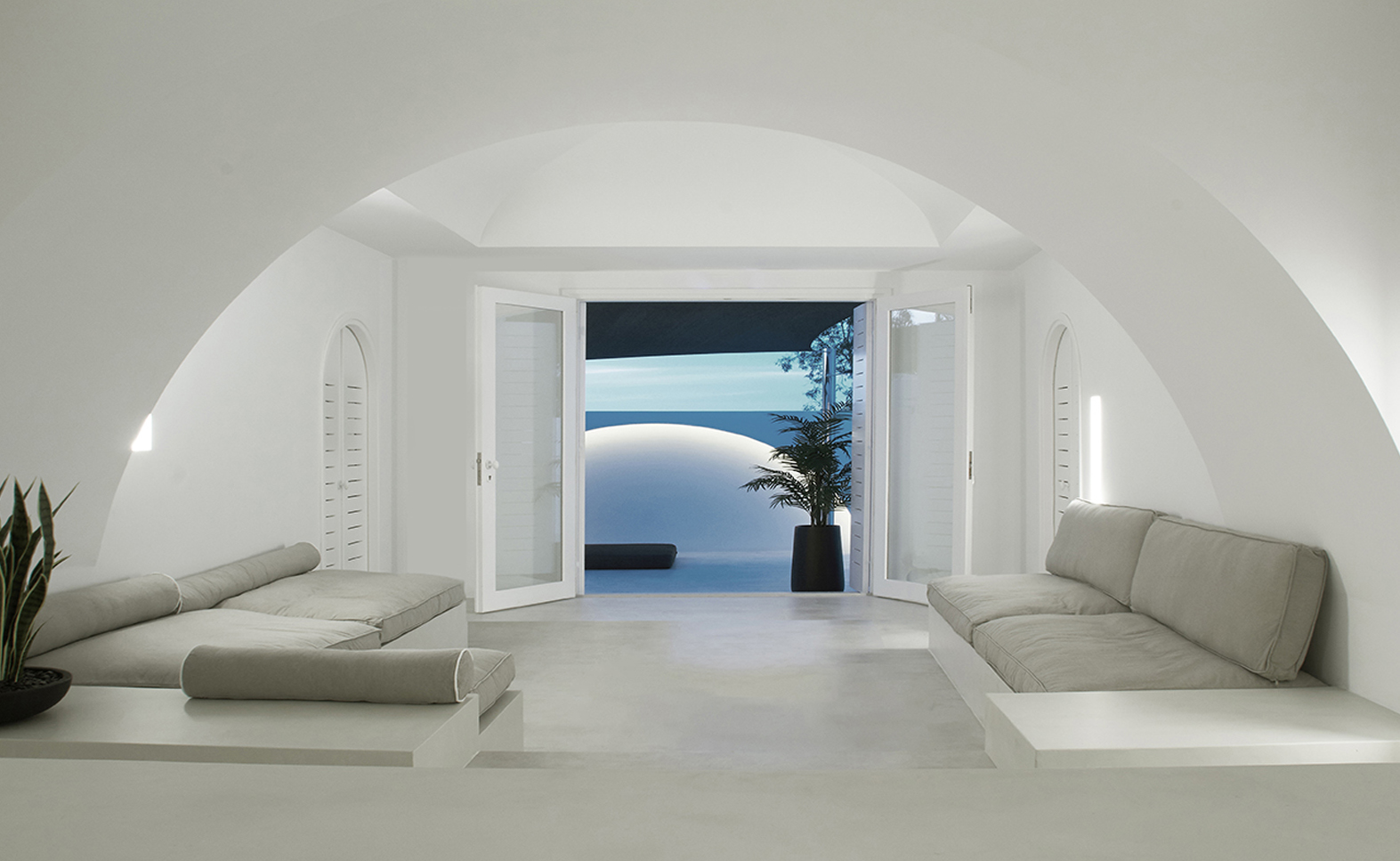
Inside, the living room and kitchen are differentiated by two manipulated cross vaults and connected through a deep and wide arched opening. This transition performs several roles simultaneously: it is a structural-spatial threshold, a framing device, and a regulator of scale. The depth of the opening thickens the passage, slowing movement and intensifying the perception of one vault before transitioning into the next.
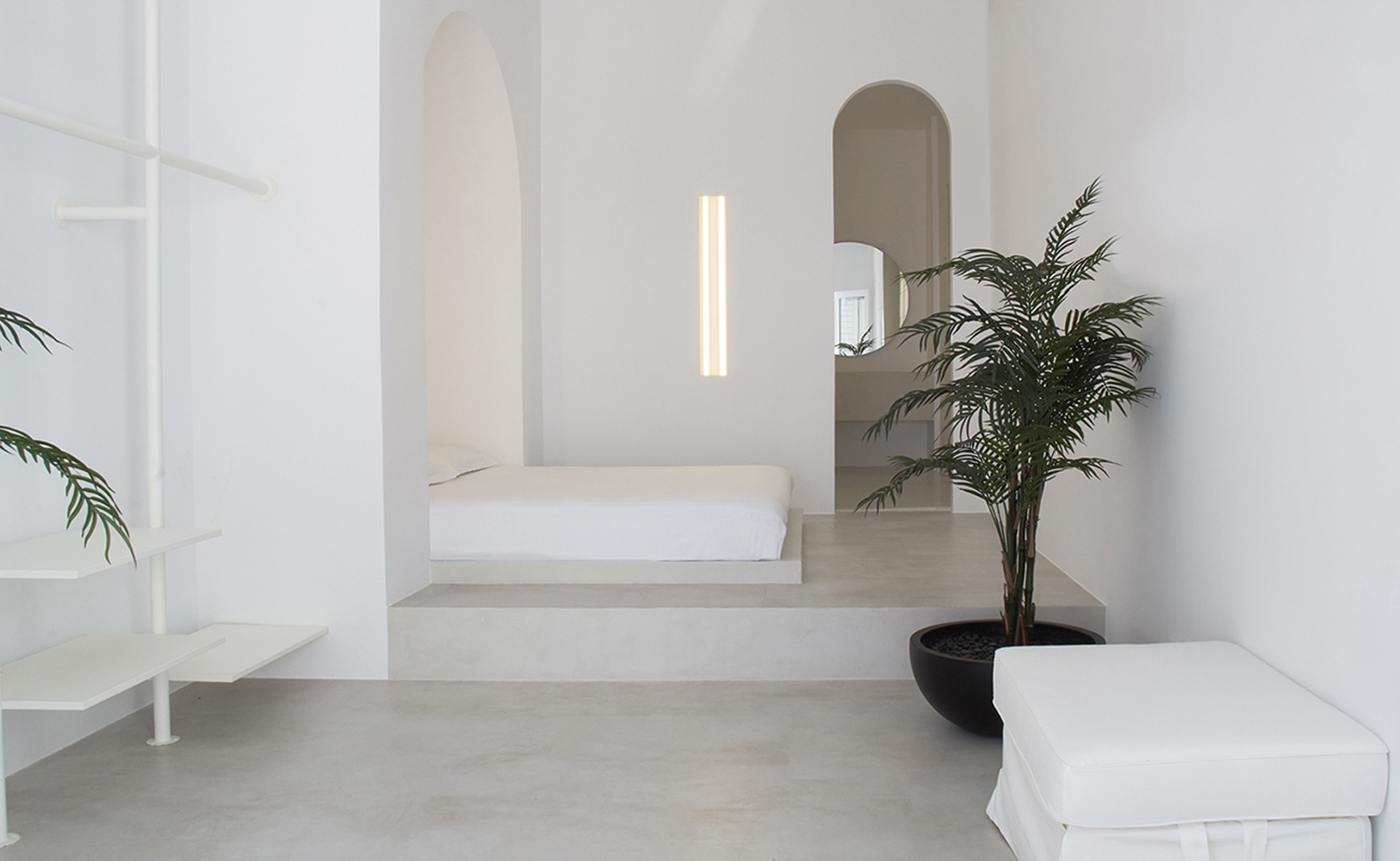
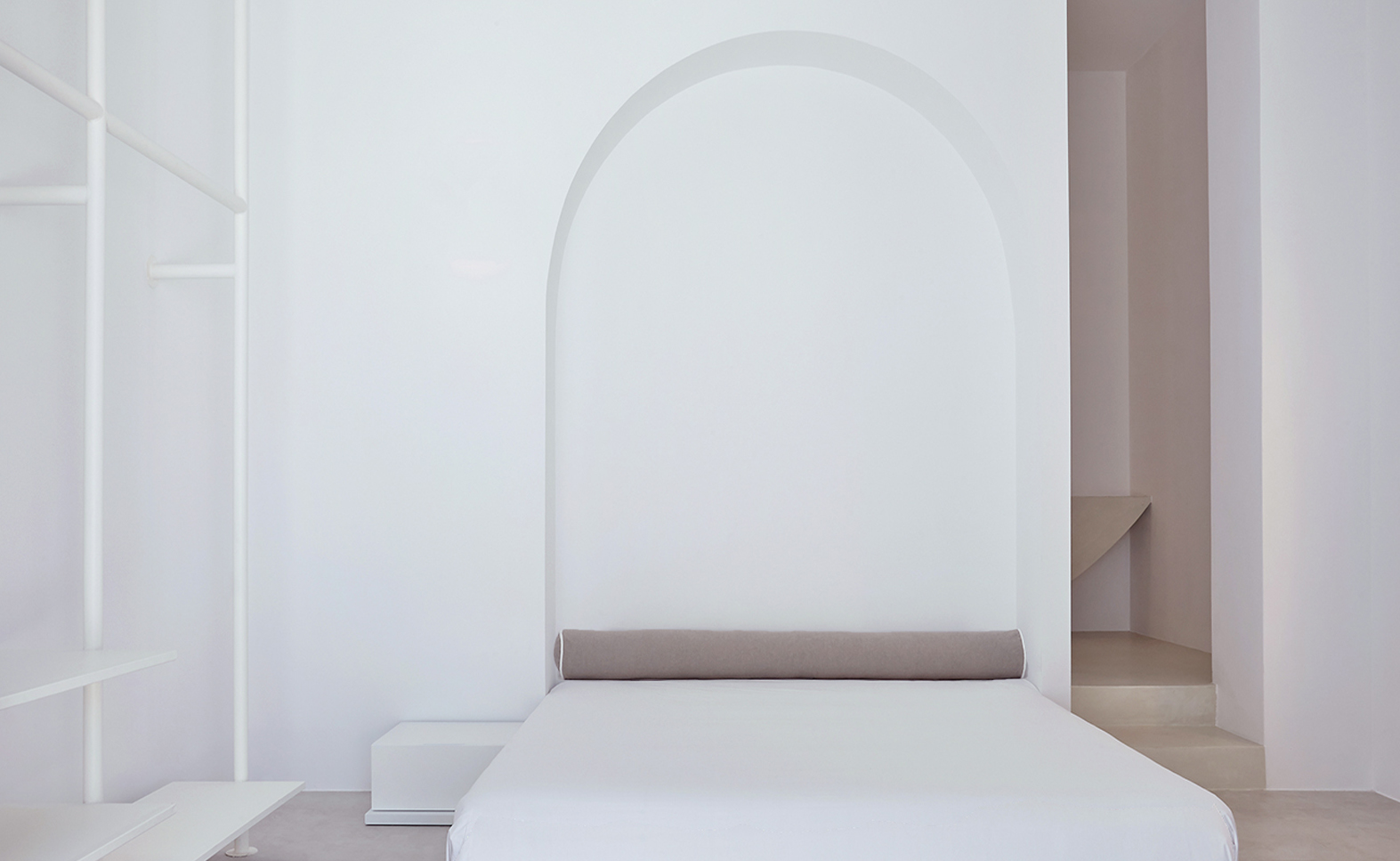
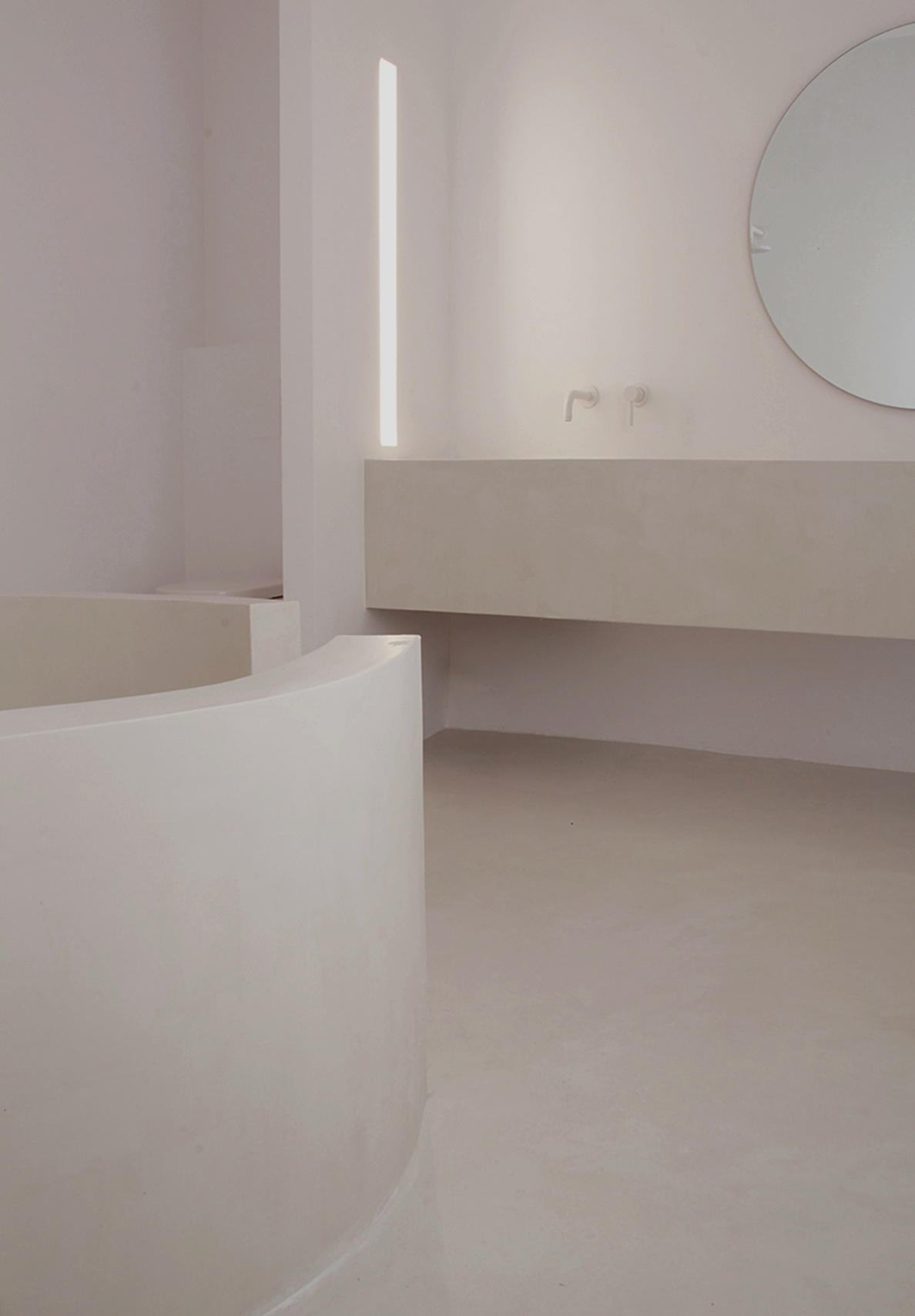
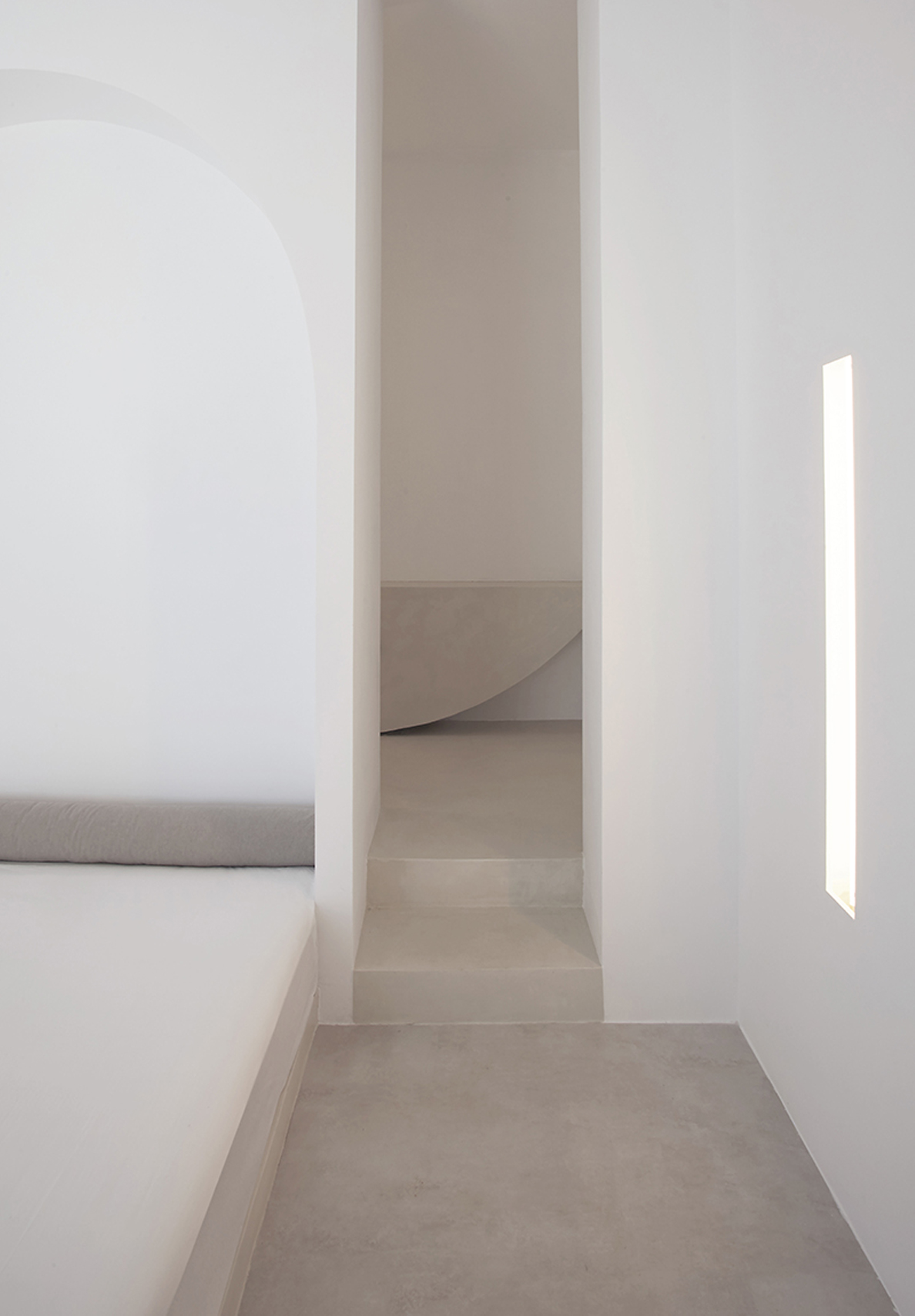
The private rooms continue the same geometric language but at the scale of inhabitation. Beds are embedded into arched wall thicknesses, converting envelope mass into furniture and reducing object clutter within the rooms. The bathrooms, meanwhile, appear as sculptural insertions with curved basins and cylindrical or circular geometries, extending the dance-derived formal vocabulary into fixtures and wet-area detailing. This integration of architecture and furniture/objects is a key technical strength of the project, producing continuity across scales.
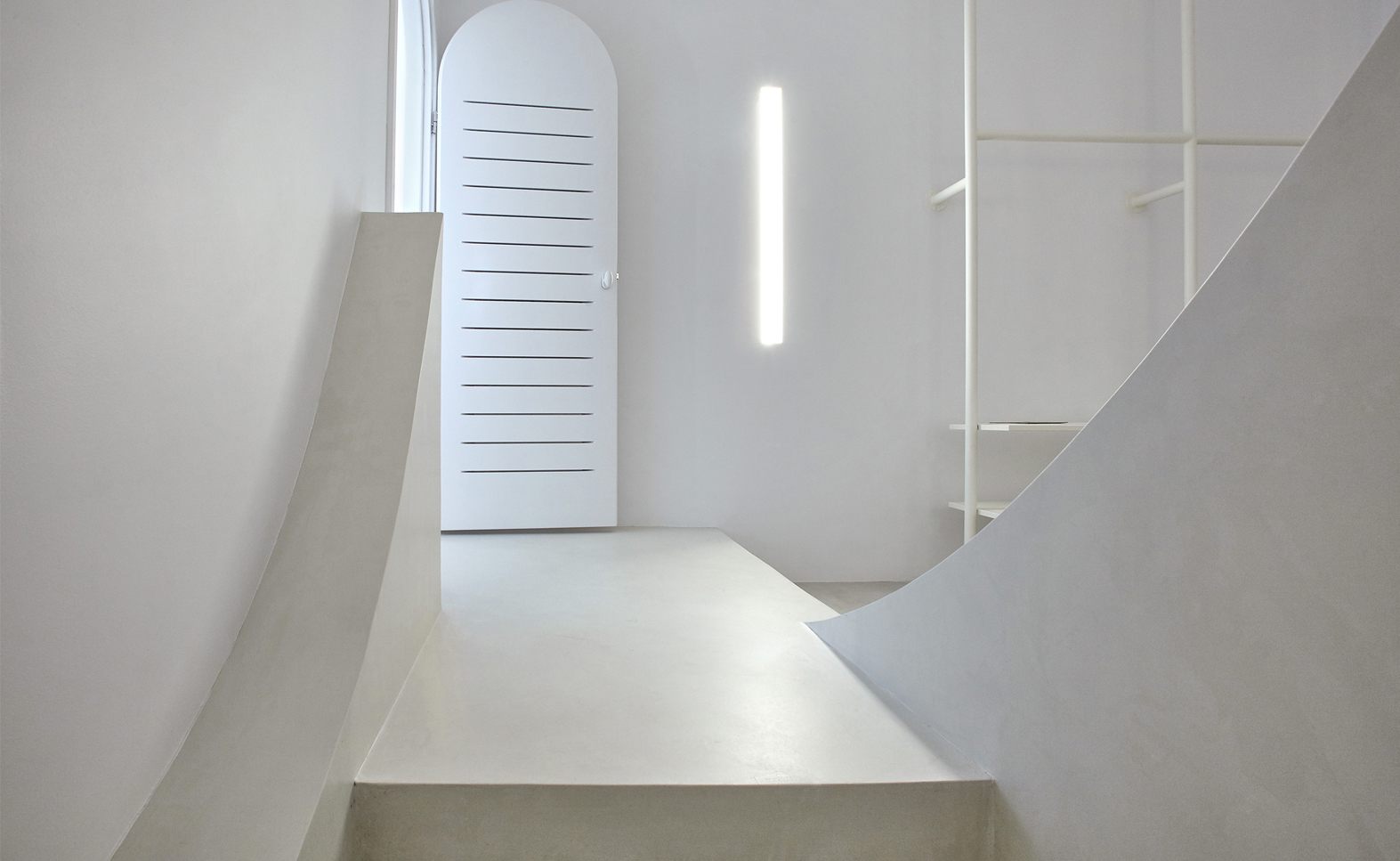
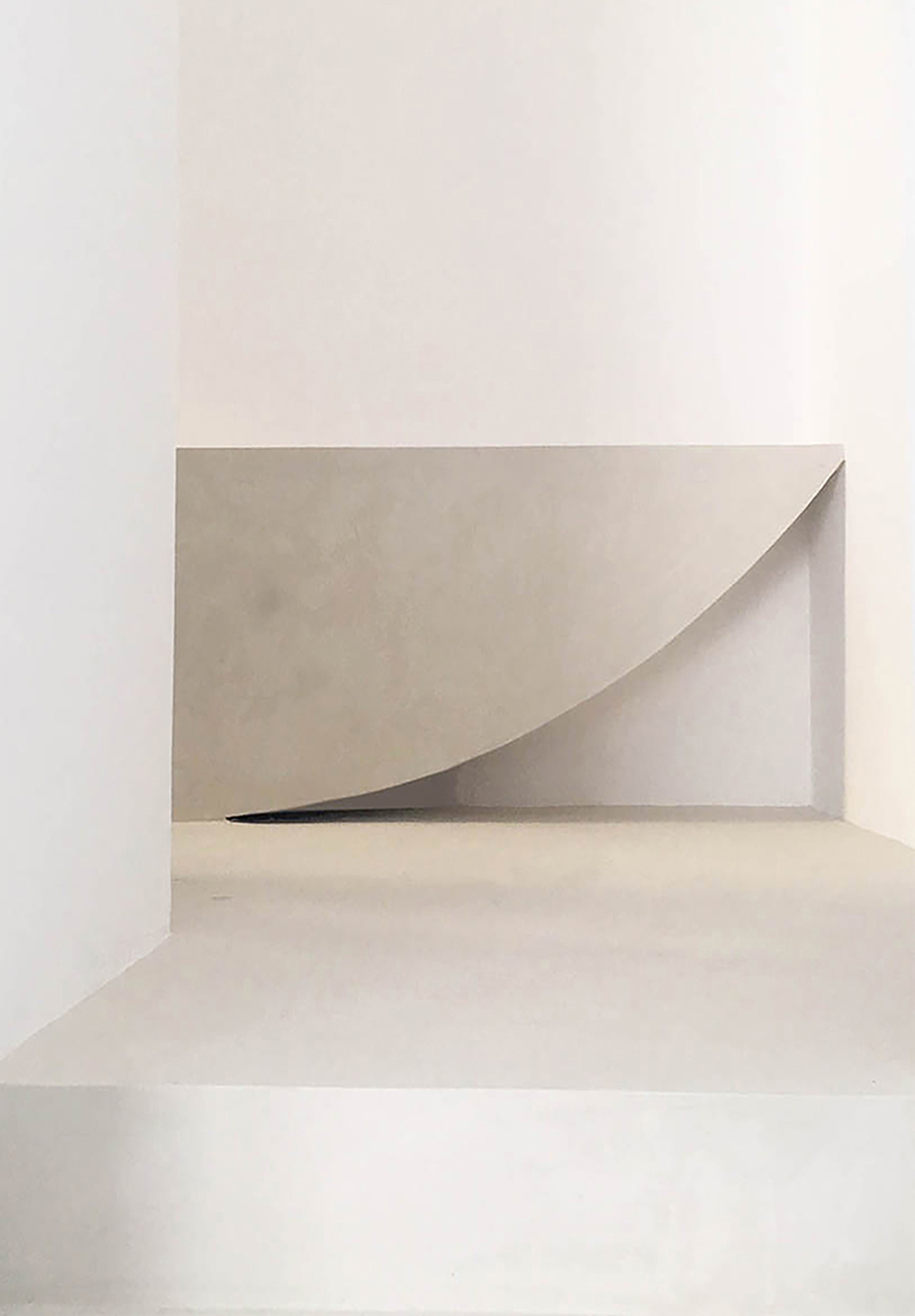
Materially, the house adopts a restrained palette consistent with Cycladic sensibilities but avoids picturesque repetition. White plastered surfaces, pale floors, and integrated masonry-built furnishings create a continuous field in which geometry, shadow, and proportion become the primary expressive tools. The monochromatic treatment is not simply aesthetic; it sharpens the reading of curvature, reveals sectional depth at arches and vaults, and supports the project’s emphasis on form as spatial choreography.
Lighting is deployed as a second geometric system. The project text identifies linear interior lighting with visible lamps, and the images confirm a strategy in which vertical and linear luminous elements emphasize direction, wall thickness, and the continuity of curved surfaces. Outdoors, illumination appears to be concentrated through the arched wall structure, creating a mirrored reading between inside and outside and reinforcing the project’s threshold logic after sunset.
What makes What I Did Was Dance particularly compelling is its ability to operate simultaneously on conceptual, perceptual, and technical levels. It transforms a noisy roadside condition into an inward, composed domestic environment through spatial sequencing, controlled openings, and integrated built form. More than a metaphor for dance, the project is a study in how architecture can stabilize motion as geometry and turn a problematic site into a highly choreographed inhabitable interior world.